
 India
India UAE (Dubai)
 Australia
 Philippines
 Thailand
 Malaysia









 Calendar Management
 Staff Management
 Inventory & Stock Mgt
 Web Mobile App
 Business Dashboard
 Billing & Invoicing
 Multi Branch management
 Integrations
Malaysia Pet Industry: The Real Story Behind Malaysia's $505M Pet Care Market

10 mins Read
Oct 13, 2026

Share

If you walk through a mall in PJ or Bangsar these days, you'll almost immediately spot pet cafes with waitlists, grooming salons tucked between boutiques, and condo lobbies that have quietly become dog-walking meet points. Something has shifted in how Malaysians live with their pets, and the numbers back up what anyone in the industry already feels on the ground. This article talks about the spending shift in pet parents & where the industry as a whole is heading in Malaysia.
The boom is real, even though the pet count isn't growing
Here's the twist that surprises people, Malaysia's actual pet population is roughly flat. The country's pet population stood at 5.34 million in 2024 and is expected to edge down slightly through 2025 and 2026. So this isn't a story about more pets. It's a story about Malaysians adopting strays, regulating breeding and spending dramatically more on the pets they already have.
Malaysia's pet care market is currently valued at around $505 million, and it's projected to reach $710 million by 2032, growing at close to a 5% annual clip. Zoom into veterinary and animal health services specifically, and the picture is similar, that market alone was worth about $469 million in 2025 and is forecast to hit $650 million by 2031. And this isn't a one-off blip, either, Malaysia's Statistics Department recorded the local pet care sector growing 25% in a single year (2022).
In simple words, the Malaysian pet owner of 2026 is not getting a new pet every year, but they are spending more on the one they have, on better food, more frequent grooming, boarding when they travel, supplements, vet visits, the works.
Cats run this country (sorry, dog people)
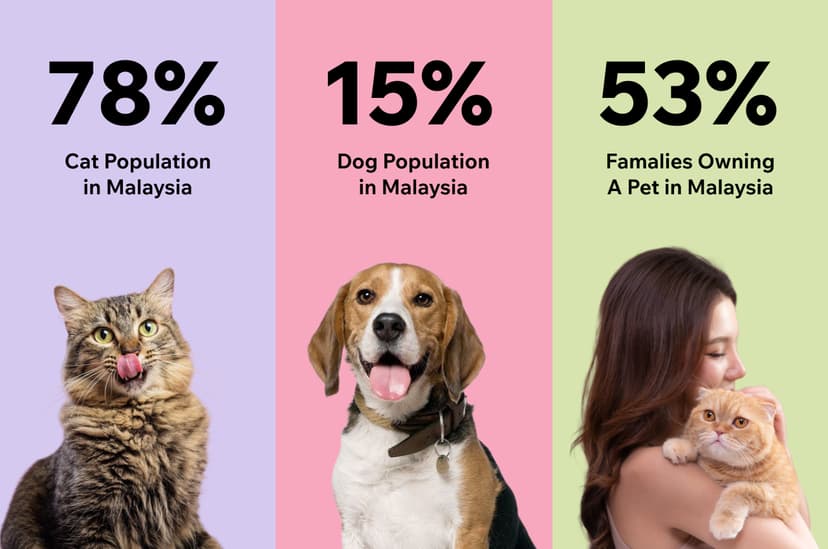
If you're building a pet business in Malaysia, it helps to know who you're actually building for. Roughly 78% of Malaysian pet owners have at least one cat, compared to about 15% with dogs, and just over half of Malaysians own a pet at all, with cats dominating the pet population by a wide margin. The Malaysian lifestyle is urbanising fast, more people live in condos and apartments than ever before, and cats fit that reality in a way dogs often can't. Add in the country's large population of community and street cats, many of whom get adopted, fed and increasingly vaccinated by nearby residents, and you get a pet economy that's quietly cat-shaped, even if dog cafes get more Instagram attention.
That matters for anyone running a grooming studio, boarding facility or vet clinic. The services, scheduling patterns, and even retail shelf space that work in a dog-heavy market like India or the Philippines don't automatically translate here.
The government is involved, more than people realise
Pet ownership in Malaysia isn't just a lifestyle trend anymore, it's increasingly a regulated one.
Housing law changed the game. Before 2015, condo management could ban pets outright, citing old Deeds of Mutual Covenant. That shifted with By-Law 14 of the Strata Management Regulations 2015, which lets residents keep pets as long as they don't cause a nuisance or safety risk.
- Enforcement is still a patchwork, though: different local councils apply their own rules on top of the same federal by-law
- The same dog can be legal in one development and effectively banned next door
- DBKL, for example, allows small breeds in high-rises under specific licensing, while other councils restrict dogs from strata buildings entirely
- For any pet business, this matters: it shapes where your customers can legally keep the pets you're grooming, boarding or treating
Animal welfare law exists, enforcement is the sticking point. The Animal Welfare Act 2015 came into force in 2017, legislating responsible pet ownership and setting up an Animal Welfare Board.
- DVS recorded 7,613 cases of animal abuse and neglect between 2021 and 2024, a sharp rise from prior years
- Over 19,000 welfare complaints have come in since 2021, but the prosecution rate sits at just 0.22%
- The pattern across Malaysia's pet ecosystem: the rules exist, the resourcing to enforce them consistently often doesn't
The stray population remains the industry's biggest unsolved problem. DVS estimated over 100,000 stray dogs as of 2022, and welfare groups argue the real number (dogs and cats combined) is far higher. It's not just a welfare issue, it shapes public perception of pet ownership and keeps fueling debate over culling versus sterilisation-based (TNVRM) programmes.
Public infrastructure for pets is genuinely improving, with some real gaps
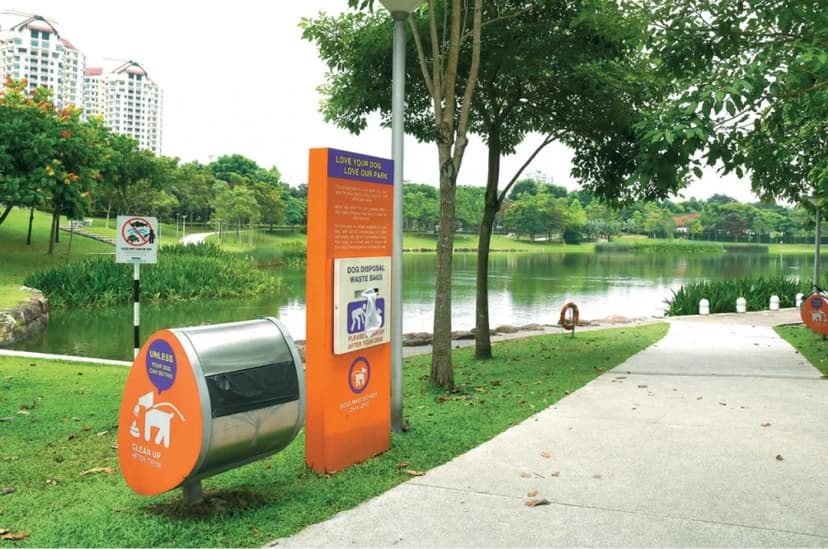
On the ground, things are visibly better than they were five years ago. A growing list of malls across the Klang Valley, Jaya One, Sunway Velocity, Sunway 163, Setia City Mall and others, now welcome leashed pets with dedicated waste stations and pet-friendly dining zones. Purpose-built pet parks have popped up in townships like Desa ParkCity, Setia Eco Park, Eco Ardence and Gamuda Gardens, and new residential developments are increasingly marketing pet-friendly green space as a selling point. Pet-friendly taxi services like GrabPet now operate in KL specifically to fill the transport gap.
That last point matters, because it's covering for a real shortfall elsewhere. Public buses operated by Rapid KL and other municipal services do not allow pets, and this is consistently enforced, and formal, fenced dog parks remain genuinely rare nationally; most pet-friendly spaces are just general parks where dogs are informally tolerated on a leash. Pet-friendly rental housing is also still a real pain point in practice, even with the law on pet owners' side, many landlords and tenancy agreements simply default to "no pets," and finding a place often comes down to word-of-mouth or Facebook groups like KL Dog Owners rather than any formal listing filter. To simply put it, the situation is better than it was, patchy compared to where it's headed.
At-home and on-demand pet services are quietly becoming a category of their own
This is one of the more interesting shifts, and it's happening fast. Malaysia has gone from zero dedicated pet-service platforms to several in a few years. PetBacker launched as Malaysia's first pet-centric platform combining grooming, dog walking, pet sitting, boarding and vet services in one app, built partly in response to real fear among pet owners around boarding incidents.
JoJo Pets, Malaysia's pet-taxi app, has grown on the insight that an estimated 5,000 grooming stores and 1,200 vets exist across the country, and getting a pet to any of them safely is often the actual bottleneck, not availability of the service itself. Regional players like PETO are now bringing at-home grooming, vet consultations, pet sitting and even cage cleaning directly to pet owners' doors in Kuala Lumpur, treating "on-demand" as the default rather than the exception.
The direction of travel is clear, Malaysian pet owners increasingly expect the service to come to them, or at least to be bookable, trackable and payable without a phone call. That's a real shift in customer expectations that grooming studios, boarders and clinics need to be ready for, whether or not they run mobile units themselves.
E-commerce has become a serious channel, not a side hustle
Malaysia's pet supplies e-commerce market generated roughly $445 million in revenue in 2025, growing 10 to 15% year-on-year, with online penetration still only around 5 to 10% of the total category, meaning there's a lot of room left to grow. Shopee and Lazada have become the default channel for pet food, grooming tools, carriers, smart feeders, and increasingly niche products for rabbits, birds and exotics. During Shopee's 11.11 sale, "Groceries and Pets" ranked among the platform's most popular categories nationally, which tells you pet spending has moved firmly into the same impulse-and-planned-purchase territory as everyday essentials.
For pet retailers and groomers who sell products alongside services, this isn't optional anymore, it's a direct signal that inventory, pricing and promotions increasingly need to work online and in-store at once.
The events calendar has gotten genuinely big
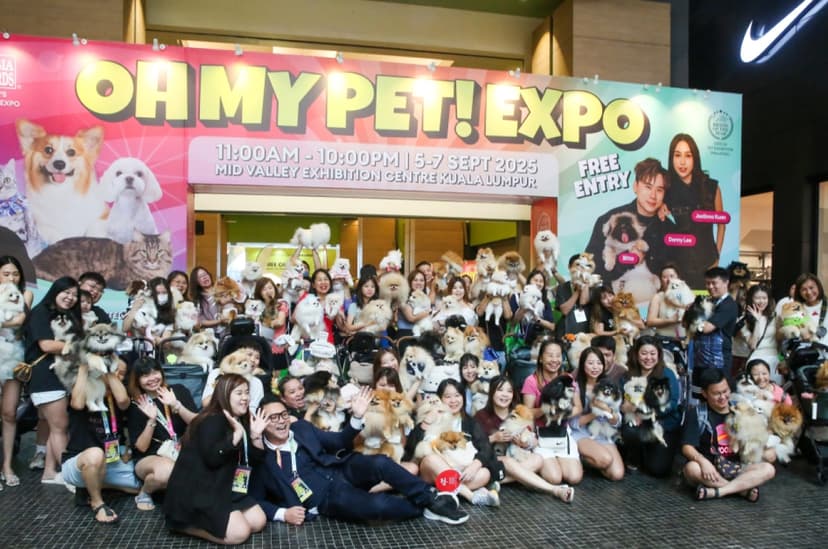
Malaysia's pet industry now has a real trade-show circuit. Oh My Pet Expo runs annually at Mid Valley Exhibition Centre KL, a three-day consumer fair covering premium food, grooming services, product launches and live demonstrations.
On the trade side, Ekspo Kucing, also known as Asia Cat Expo, is now Malaysia's largest feline-focused exhibition; its most recent edition drew nearly 26,000 attendees and almost 400 participating brands across 126 exhibitors.
Pet Expo Johor Bahru has extended the circuit south, and Pet Expo Malaysia itself runs annually at the Malaysia International Trade and Exhibition Centre, drawing over 25,000 visitors and 300-plus exhibitors. For a market this size, that's a dense events calendar, and it says something about how seriously brands, including international ones, now take Malaysia as a standalone pet market rather than an afterthought to Singapore.
Where the real gaps are
Pulling all of this together, a few gaps stand out clearly:
- Enforcement, not legislation: Malaysia generally has the laws on the books, strata pet rights, animal welfare protections, but enforcement capacity hasn't kept pace, leaving outcomes inconsistent by council and by case.
- Stray management remains unsolved: This continues to shape public sentiment around pet ownership more broadly.
- Transport infrastructure lags the rest of the ecosystem: Pet-friendly parks, cafés and malls have multiplied, but getting a pet there without a car or a pet-taxi app is still genuinely hard.
- Operationally, growing pet businesses are still running lean on tooling: This is the one that doesn't show up in any market report, but comes up constantly in conversations with pet business owners. A grooming studio that started with one groomer and a notebook is now fielding bookings over WhatsApp, Instagram DMs and phone calls, often all three at once, with no single calendar to check against. A boarding facility that used to fill up only during festive season is now booked out weeks in advance, with vaccination records still living in a folder of photos on someone's phone. A small vet clinic has a growing list of regulars but no easy way to flag who's overdue for their next shot.
None of this is unique to Malaysia, the same pattern shows up across India, the Philippines and the Middle East. But it hits differently in a market where the pet count isn't climbing and the real growth lever is retention and repeat spend. If a business can't tell which customers haven't come back in three months, or can't send a vaccination reminder without someone manually checking a calendar, they're leaving money on the table in the one condition that matters most here: getting the pet parents you already have to spend more, more often.
Where Happy Pet Tech comes in
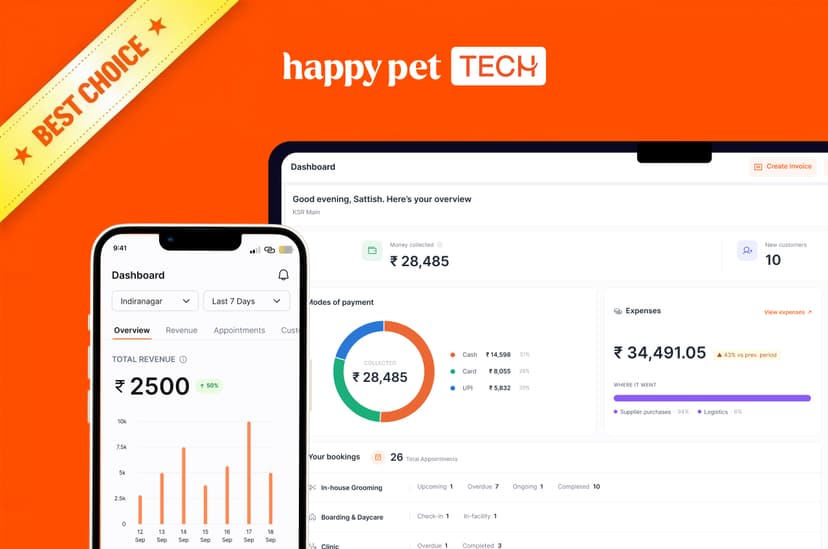
This is exactly the gap we built Happy Pet Tech to close. We work with grooming studios, boarding and daycare facilities, and vet clinics across India, the Philippines and the Middle East, and we're now bringing the same platform to Malaysia's pet businesses.
In practice, that means one system to run bookings across every channel instead of juggling WhatsApp, Instagram and walk-ins separately, digital pet profiles so staff aren't relying on memory or sticky notes, automated reminders for grooming, vaccinations and repeat visits, and straightforward billing and inventory so retail add-ons like food, treats and accessories (the same ones flying off the shelves on Shopee) aren't an afterthought in-store either.
For a market where the real opportunity is getting more out of the pet parents you already have, rather than chasing a pet population that's barely growing, that kind of visibility isn't a nice-to-have. It's the difference between a business that's busy and a business that's actually scaling.
Conclusion
If you're running a pet business in Malaysia and still coordinating your day from three different apps, it might be worth seeing what one system can do instead.
How Inconsistent Pet Boarding Check-Ins Are Costing You Repeat Customers
Oct 09, 2026

5 Things to Look for When Choosing Inventory Management Software for Your Pet Business in 2026
Oct 09, 2026
Pet Client Retention Strategies: Follow-Ups, Loyalty and Communication
Sep 29, 2026
How to Use WhatsApp to Grow Your Pet Business? (Automation + Templates)
Aug 20, 2026