
 India
India UAE (Dubai)
 Australia
 Philippines
 Thailand









 Calendar Management
 Staff Management
 Inventory & Stock Mgt
 Web Mobile App
 Business Dashboard
 Billing & Invoicing
 Multi Branch management
 Integrations
Pet Client Retention Strategies: Follow-Ups, Loyalty and Communication

8 mins Read
Sep 29, 2026

Share
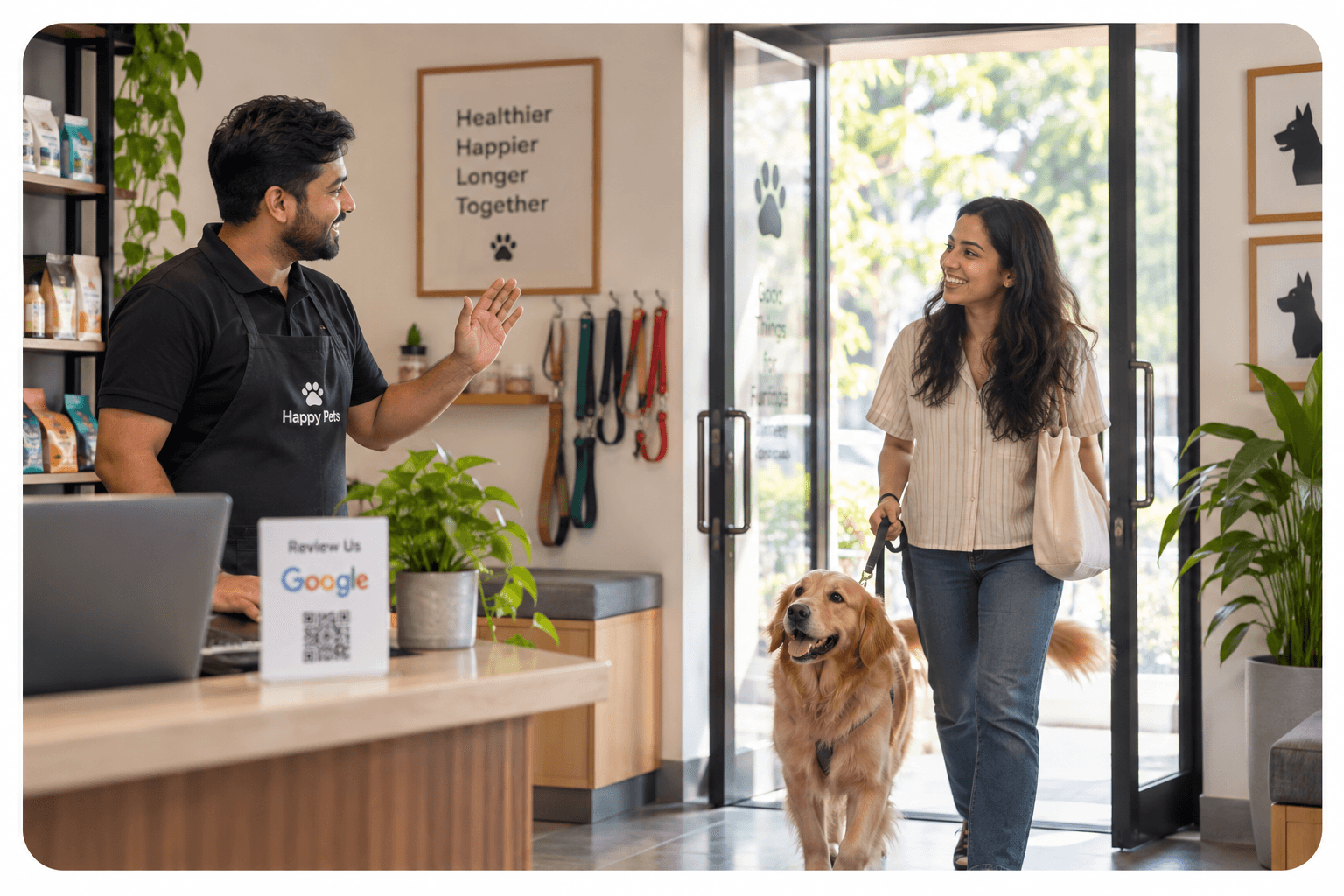
Acquiring a new customer costs anywhere from 5 to 25 times more than keeping an existing one, according to Harvard Business Review. Working with pet businesses across India, UAE, Australia, the Philippines and Thailand, the pattern is consistent. Very few have a real system for retention.
Most pet businesses rely on memory, or just hope things will work out. But hope doesn't bring clients back. Without a system, follow-ups get missed, and clients quietly drift away without anyone noticing until it's too late.
This guide covers why clients really leave, a follow-up cadence you can run every week, a communication plan by channel, how to handle complaints, and a loyalty program clients will actually use.
Why Client Retention Matters More Than New Client Acquisition
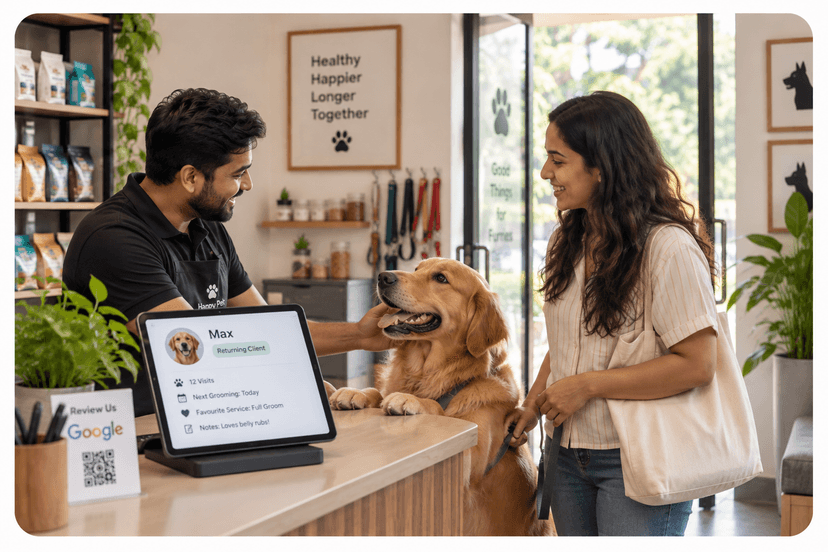
A repeat client already trusts you. They already know your prices and your team, so you don't have to convince them twice.
Small gains in retention add up fast. A 5 percent increase in retention can raise profits by 25 to 95 percent, according to Harvard Business Review. Selling to an existing client is also just easier. Research from Marketing Metrics puts the odds of selling to an existing customer at 60 to 70 percent, compared to just 5 to 20 percent for a new prospect.
This applies whether you run a grooming salon, a boarding facility, a daycare, a vet clinic, or a pet store. If you're comparing tools, our pages on pet grooming software, pet boarding software, and veterinary software each break down what matters for that business type.
Why Customers Stop Coming Back
Before fixing retention, it helps to know why clients actually leave. The reasons are usually simple.
- Price shock. A client is surprised by a bill that's higher than they expected, with no warning beforehand.
- Poor communication. Missed calls, unclear appointment times, or no confirmation message.
- Scheduling hassle. Booking a slot takes too many calls or too much back and forth.
- Forgetting to rebook. No one reminded them, so life got in the way.
None of these are dramatic. That's actually the point. Small friction adds up, and clients rarely tell you why they stopped coming. They just stop.
Why the First Visit Decides Everything
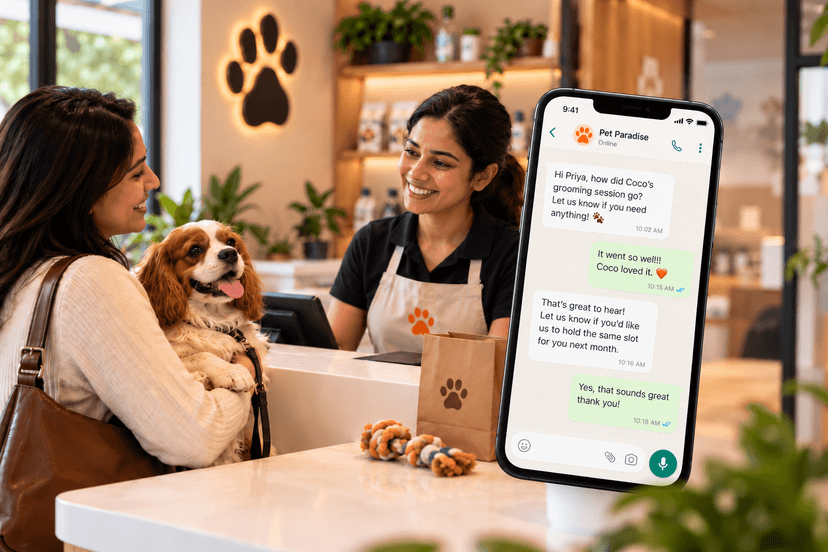
Most clients who don't come back are lost after their very first visit, not their tenth. The first visit is where a client decides if this is a place they trust with their pet.
This means your first-visit follow-up matters more than any other message you'll send them. Ask how it went. Fix anything that felt off, even something small. And make the next booking easy, before they've had time to consider other options.
Build a Follow-Up System That Doesn't Rely on Memory
If follow-ups depend on someone remembering, they'll slip through the cracks sooner or later. What you actually need is a system that runs whether anyone remembers or not.
The Follow-Up Cadence That Works
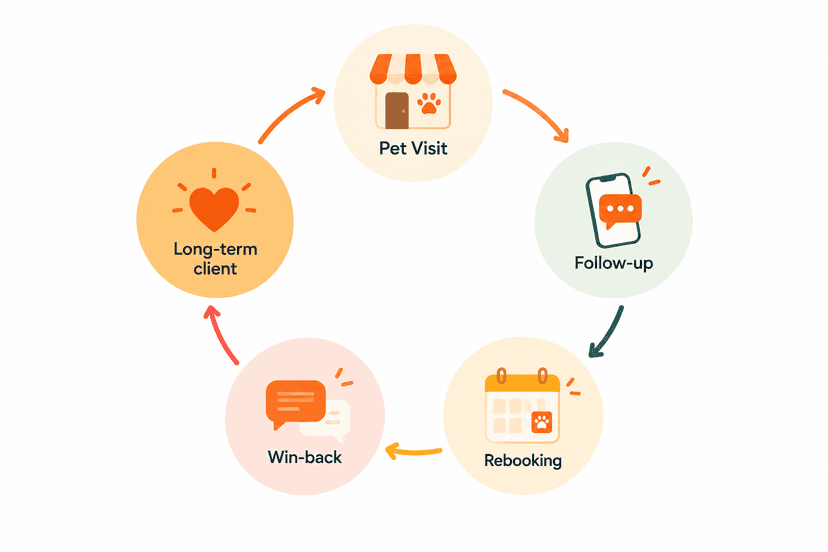
Here's a simple cadence that works for most pet businesses.
- Send a follow-up within 24 to 48 hours of every service. Ask how it went.
- Send a rebooking nudge 1 to 2 weeks before the client's usual gap between visits.
- Trigger a win-back message after 30 to 45 days of no activity.
- Mark birthdays and service anniversaries with a short note.
None of this needs to be complicated. It just needs to happen every time, for every client.
Follow-Up Message Templates by Channel
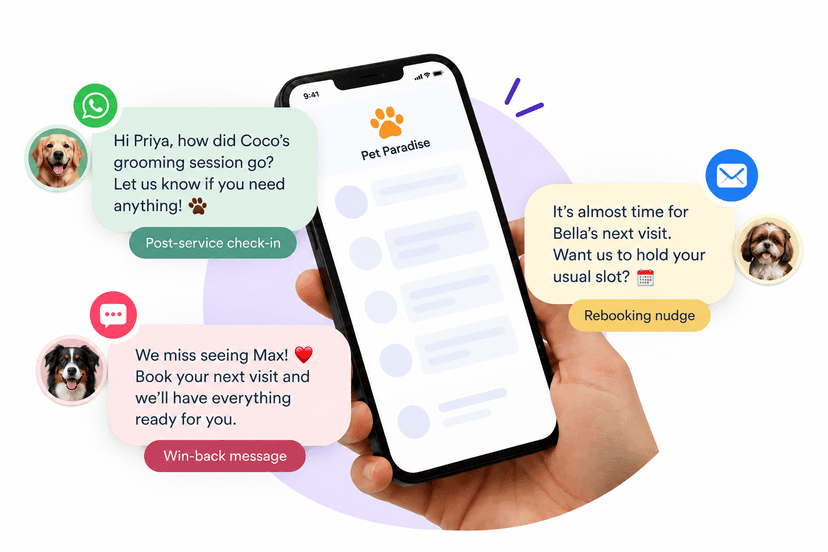
Keep messages short and personal, so they feel like they came from a person, not a system. A few examples:
Post-service check-in: “Hi [Name], how did [Pet Name]'s grooming session go? Let us know if you need anything.”
Rebooking nudge: “It's almost time for [Pet Name]'s next visit. Want us to hold your usual slot?”
Win-back message: “We miss seeing [Pet Name]! Book your next visit and we'll have everything ready.”
Swap in your business name and tone. The structure matters more than the exact words.
Happy Pet Tech Simplifies This for You
Writing every message from scratch doesn't scale past a handful of clients. Happy Pet Tech has templates made for all of this. That includes post-service check-ins, rebooking nudges, and win-back messages. Just choose one and send it to your client.
Communication Strategy: What to Say, When, and On Which Channel
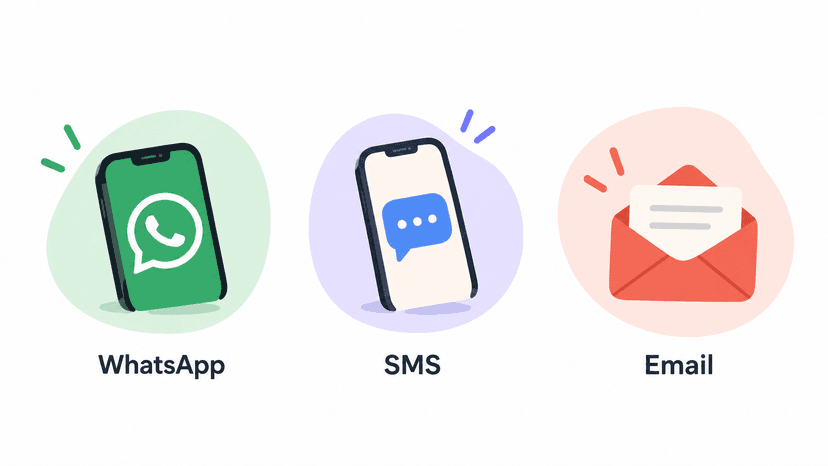
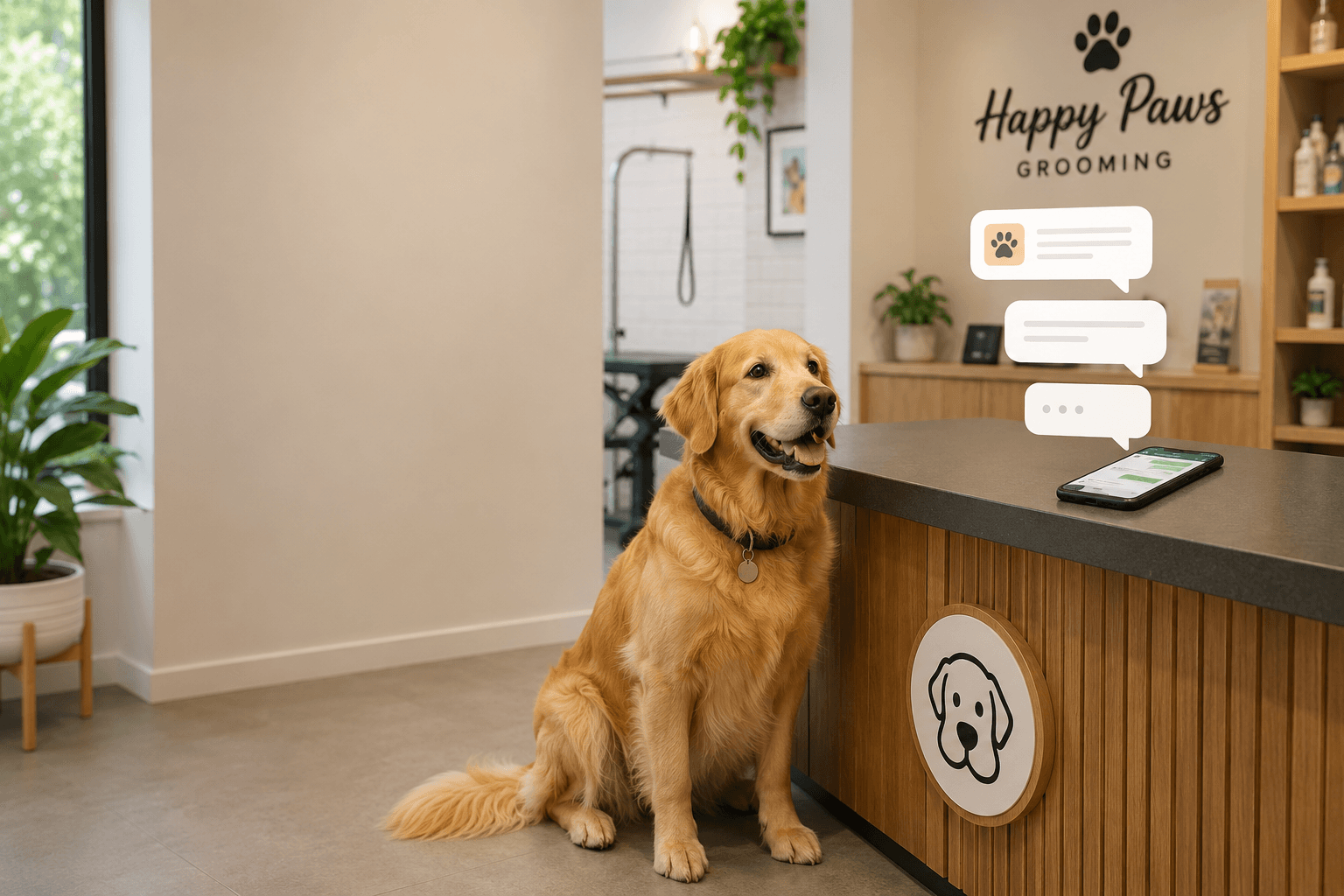
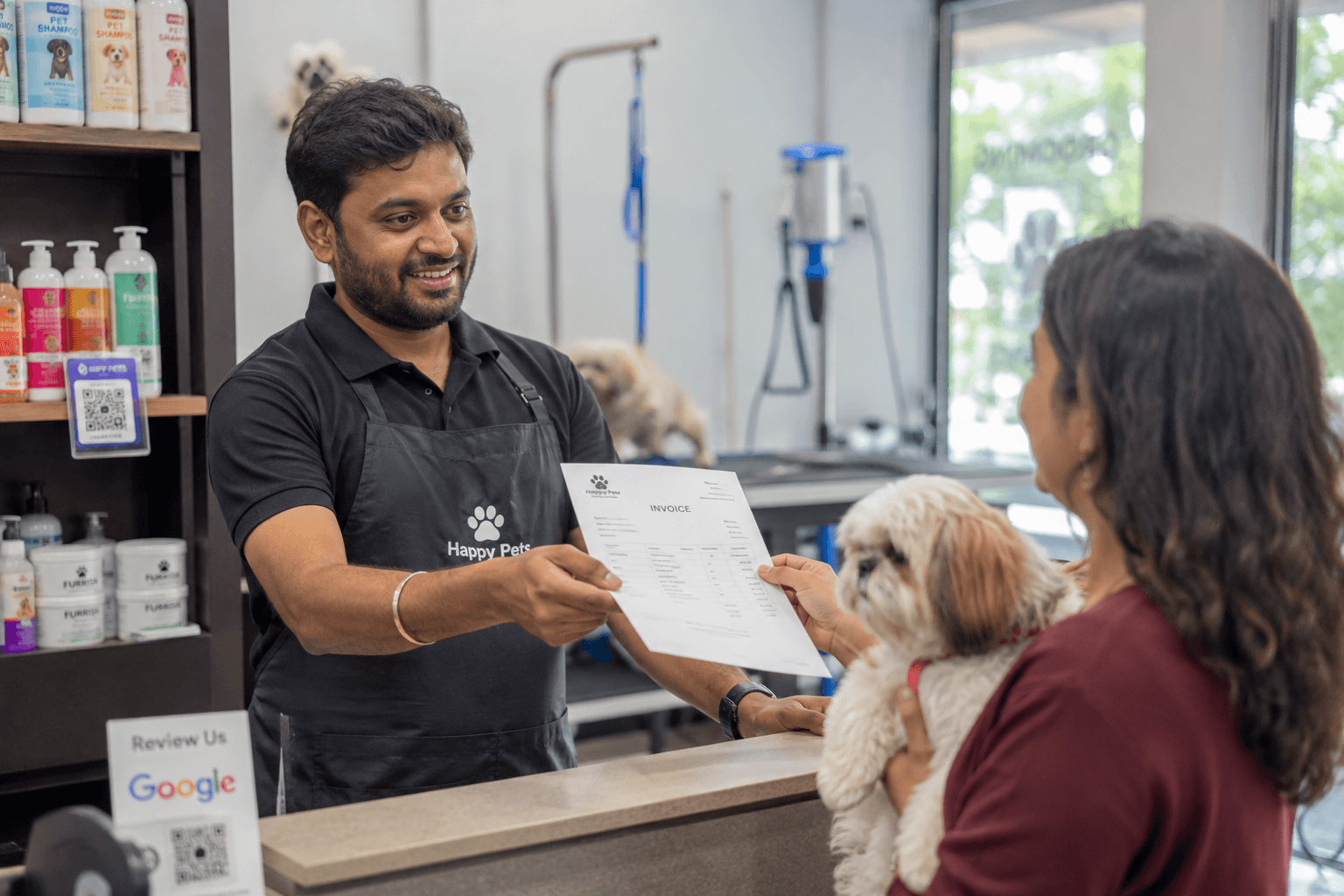
Not every message belongs on every channel. Pick the right one for the moment. WhatsApp works well for quick, personal updates. Appointment reminders, invoices, and rebooking nudges fit naturally here because most pet owners already check WhatsApp daily. WhatsApp invoicing means clients see their bill right away instead of digging through email.
SMS works well for short, urgent messages, like a last-minute schedule change.
Email works better for longer updates, like monthly newsletters, loyalty program updates, or seasonal offers.
Happy Pet Tech supports all three, so you can reach every client on the channel that suits the message.
Handling Complaints the Right Way
A mistake, handled well, can build more loyalty than a perfect visit. Several pet businesses have found this to be true. Clients remember how you responded far more than what went wrong.
A few steps make this work:
- Respond quickly. Don't let a complaint sit for days.
- Acknowledge what happened, without getting defensive.
- Fix it in a way that feels fair, even if it costs you a little.
- Follow up a few days later to check the client is satisfied.
A complaint handled this way often turns into a client who trusts you more, not less.
Build a Loyalty Program Pet Owners Actually Use
A loyalty program only works if clients understand it and use it without effort.
There are two common models, and both work well depending on your business.
Points vs. Package/Membership Models
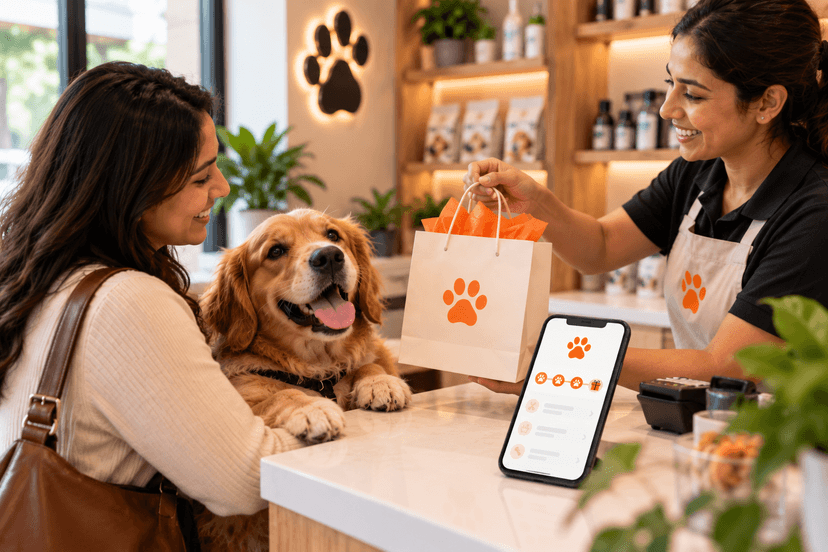
A points program gives clients points per visit or per rupee spent, which add up to a discount or a free service.
A package or membership model lets clients pay upfront for a set number of services at a lower rate. This also improves your cash flow, since you get paid before the service happens.
Happy Pet Tech's wallet feature supports this well. Clients top up their wallet in advance, and each visit draws from that balance. It's simple to track and simple for clients to understand.
Referral Incentives That Multiply Retention
Referrals bring in new clients at almost no cost. Reward both sides of the referral, not just the new client.
For example, give the existing client a discount and the new client a small welcome offer. This encourages your best clients to spread the word.
How to Measure If Your Retention Strategy Is Working
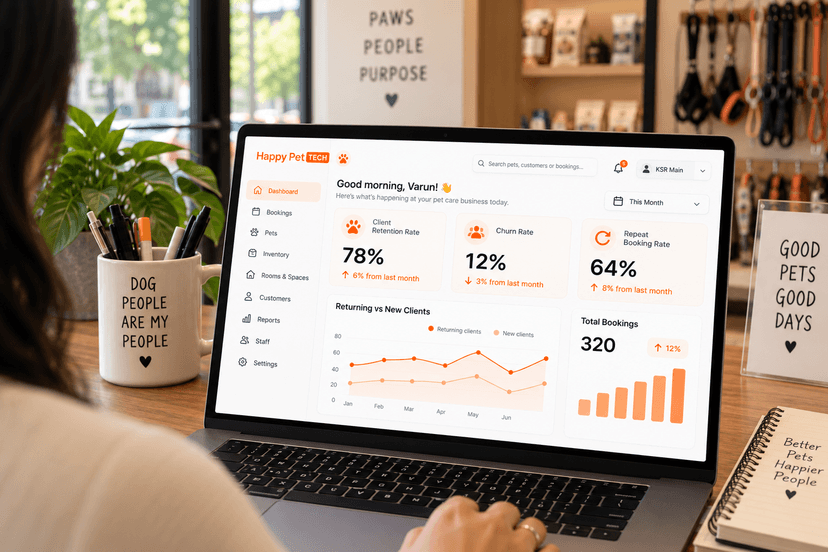
You can't improve what you don't measure. Track a few simple numbers each month.
Client retention rate is the percentage of clients who return within their expected visit window.
Churn rate is the percentage of clients who stop coming altogether.
Repeat booking rate shows how many of your total bookings come from returning clients versus new ones.
Calculating these by hand every month gets tedious fast. A retention reporting dashboard shows these numbers in one place, so you always know where retention stands without pulling data together yourself.
Ready to Put This Into Practice?
You don't have to build this retention system by hand. Happy Pet Tech brings follow-ups, WhatsApp invoicing, wallet-based loyalty, and reporting into one platform built for pet businesses. Book a Free Demo to see how it fits your business.
FAQs
1.How often should I follow up with pet grooming or boarding clients? Follow up within 24 to 48 hours after every service. Then send a rebooking reminder before their next expected visit, based on how often they usually come in.
2.What's a good client retention rate for a pet business? Retention rates vary by business type, but most healthy pet businesses aim for 60 to 80 percent. If you're below that, a follow-up system usually helps close the gap.
3.How do I start a loyalty program for a small grooming or boarding business? Start simple. A points system or a prepaid package works well for most small businesses. You don't need a complex setup, just a clear reward clients understand.
4.What's the best channel to send appointment reminders and follow-ups? WhatsApp works best for most pet businesses, since it feels personal and most clients check it daily. Use email for longer updates and SMS for urgent, short messages.
5.How much more does it cost to acquire a new client than retain one? Acquiring a new client typically costs 5 to 25 times more than retaining an existing one, according to Harvard Business Review. This is mainly due to ad spend and the time needed to build trust, which is why a retention system pays off quickly.
Conclusion
Good retention comes from small habits, not big gestures. So follow up after every service. And ask how it went. Rebook at checkout, because clients say yes in person. Then message them on the channel they use most. And reach out before they drift away. But none of this works if it depends on memory. So build a simple system that runs every time. When you do, your clients keep coming back.
How to Use WhatsApp to Grow Your Pet Business? (Automation + Templates)
Aug 20, 2026
GST Invoicing for Pet Business: Things You Should Know Before Tax Filing in India (Beginner's Guide)
Aug 08, 2026
Best Pet Grooming Software in 2026: Complete Comparison Guide
Aug 06, 2026

Best Pet Boarding Software in 2026: Complete Comparison Guide
Jul 31, 2026