
 India
India UAE (Dubai)
 Australia
 Philippines
 Thailand
 Malaysia









 Calendar Management
 Staff Management
 Inventory & Stock Mgt
 Web Mobile App
 Business Dashboard
 Billing & Invoicing
 Multi Branch management
 Integrations
5 Things to Consider Before Choosing an Inventory Software for Your Pet Business

7 mins Read
Mar 13, 2026

Share
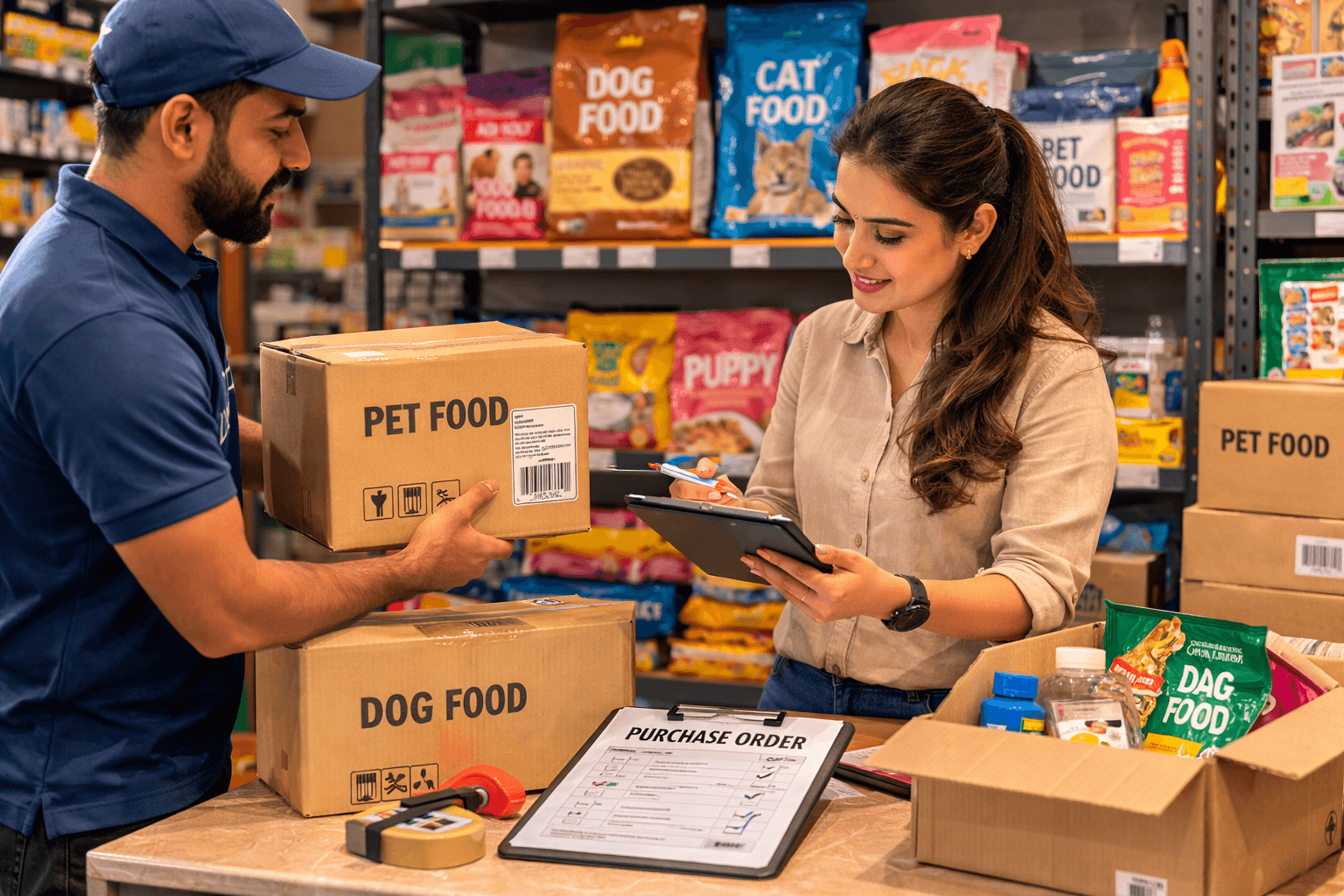
Over the past few months, I’ve interacted with many pet business owners while discussing their day-to-day operations. One common pattern I noticed was around inventory management.
Some businesses already use inventory software, but often only at a very basic level. In many cases, the software is used just to add products and generate bills, without really leveraging the features that help manage stock effectively. Important capabilities like batch tracking, purchase visibility, reporting, or alerts are often left unused simply because the system was never properly understood or set up for the business.
On the other hand, there are also many pet businesses that haven’t adopted inventory software at all. The most common reason isn’t that they don’t see the value but it’s the hesitation around getting started. Concerns about product data migration, initial setup, and the fear of disrupting existing operations often hold them back from implementing a proper system.
Both situations lead to the same challenge: inventory ends up being managed partially through the software and partially through memory, spreadsheets, or manual tracking.
That’s exactly why I wanted to write this article.
The goal is not just to suggest using inventory software, but to help pet businesses choose the right one and understand what actually matters when evaluating it. When the right system is implemented properly, inventory software can become more than just a billing tool, it can become a central operational system that helps the business stay organized, compliant, and ready to grow.
Based on what I’ve observed, I want to double down on five things you should consider before choosing an inventory software for your pet business.
1. Real-Time Stock Tracking and Management
Good inventory management starts with knowing exactly what stock you have and how it is moving. Products like pet food, supplements, and medicines often come in multiple batches with different expiry dates, cost prices, and selling prices. Without proper tracking, businesses may accidentally sell expired products or lose money due to incorrect pricing.
A good inventory system should allow you to track stock batch-wise, including expiry date, purchase cost, and MRP/selling price. This ensures that every unit of stock is accounted for correctly.
Beyond just stock numbers, visibility into stock movement history is equally important. You should be able to clearly see:
- Which vendor supplied the product
- When it was purchased
- How the stock moved over time
- Which batch the sale came from
Having a clear product-level and purchase-level history helps businesses quickly trace inventory issues, handle returns, and maintain better control over stock.

2. Built-in POS and Invoicing
Many inventory tools in the market function mainly as stock ledgers. When it comes to billing customers, they often require integration with a separate POS or invoicing system from the same software suite in order to operate efficiently at the billing desk.
In many cases, these billing features are also locked behind higher pricing plans or additional modules, which means businesses need to upgrade their subscription or add another product just to enable billing with a proper POS-level experience.
While this approach may work, it introduces additional complexity. Businesses often need to spend time:
- Understanding how the integrations work
- Setting up and configuring the connection
- Managing feature limitations across different plans
- Handling multiple subscriptions within the same ecosystem
For small and growing pet businesses, this can quickly become time-consuming and unnecessarily expensive.
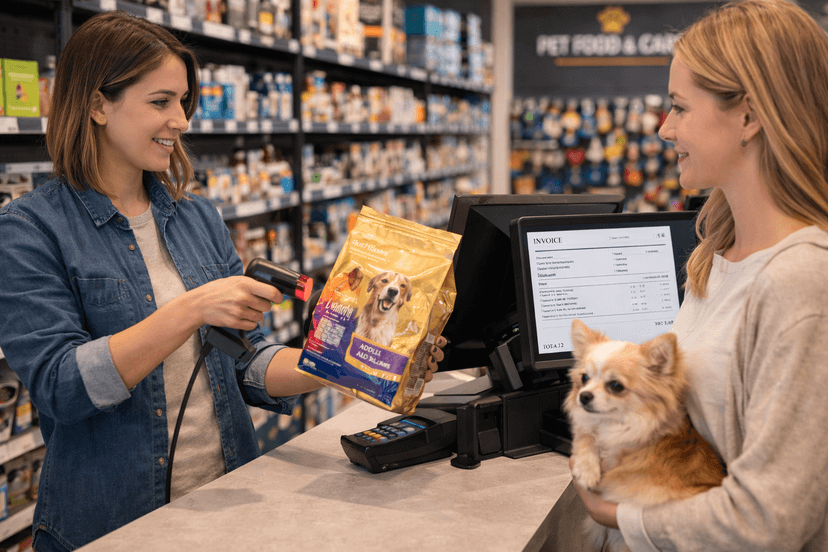
An ideal inventory software should include built-in POS and invoicing capabilities, allowing businesses to manage:
- In-store billing
- Product sales, including returns and refunds
- Invoice generation, all from a single platform.
When billing and inventory work together seamlessly, stock updates happen instantly, reducing errors and making day-to-day operations much simpler.

3. Automation and Compliance (Reporting and Alerts)
Inventory management is not just about recording transactions; it’s also about making the right information available to the right stakeholders at the right time.
Reporting plays a crucial role here. Different stakeholders in a business require different types of reports.
For example:
Pet Business owners focus on revenue, sales trends, and stock status.
Chartered accountants focus on purchase summaries, tax reports, and sales data to calculate input tax credit (ITC) and output tax liabilities.
An effective inventory system should allow automated periodic reports, such as daily, weekly, or monthly reports, so stakeholders receive the information they need without manually generating reports each time.
Compliance is another critical factor. The software should help businesses stay aligned with tax regulations and simplify reporting rather than forcing users to navigate complex technical jargon.
Alerting is equally important. A good system should notify businesses about:
- Low stock levels
- Products nearing expiry
- Important tax or compliance updates
In case of regulatory changes, the system should also support bulk actions or guided workflows that help businesses update their inventory data quickly and stay compliant.
Compliance here mainly refers to GST reporting and tax filing requirements that arise from recording purchases and sales in the system.
If you are unsure about GST registration, we’ve also written a simple guide explaining when GST registration becomes mandatory for pet businesses.
It also covers why getting registered early can benefit growing stores.

4. Vendor and Purchase Management
Pet businesses typically work with multiple vendors and distributors supplying pet food brands, medicines, grooming products, toys, and accessories. Managing purchases across different vendors can quickly become hectic when handled manually.
A good inventory system should make vendor and purchase management structured and transparent.
Businesses should be able to:
- Maintain a vendor directory with purchase history
- Create and track purchase orders
- Record partial deliveries or backorders
- Track batch details, expiry dates, and pricing at the time of purchase
- Maintain a clear purchase trail for accounting and compliance
Having a well-defined purchase flow ensures that inventory entering the system is properly documented and traceable.
For accountants, this simplifies purchase summaries required for tax filings, while business owners gain better visibility into vendor performance, pricing trends, and procurement efficiency.
In short, strong vendor and purchase management helps businesses maintain accurate inventory, smoother procurement, and better financial transparency.
5. Scalability for Business Growth
Most pet businesses start small perhaps with a single store and a limited product catalog. But as the business grows, inventory operations can quickly become difficult to manage as more products, vendors, and transactions enter the system.
Growth may involve:
- Expanding product catalogs
- Managing thousands of SKUs
- Working with more vendors
- Opening additional store locations
- Handling higher sales volumes
If the inventory system cannot scale with this growth, businesses eventually face operational bottlenecks and may even be forced to migrate to a new system, something that can be both disruptive and time-consuming.
A well-designed inventory software should be able to support business growth without requiring major system changes.
This means the system should comfortably handle:
- Increasing product catalogs and batch records
- Higher transaction volumes
- More users and stakeholders
- Expanded reporting requirements
A scalable system ensures that the same platform can support the business from its early stages to a much larger operational scale, without disrupting daily operations.
It becomes the operational backbone of your pet business.
This is exactly the direction we had in mind while building Happy Pet Tech's Inventory for Pet Stores.
Happy Pet Tech is designed specifically for pet businesses, not as a generic inventory system adapted for retail. It brings together inventory management, billing, reporting, and operational tools into a single platform, helping pet store owners manage their products, sales, and daily operations without juggling multiple tools.
The goal is simple: help pet businesses spend less time managing systems and more time focusing on their customers and pets.
Conclusion
Choosing the right inventory software is not just about tracking products it’s about building a system that supports your daily operations, financial clarity, and future growth all by serving you the pet business owner, store manager and your chartered accountant.
Pet Business Licences in Malaysia: What Pet Shops, Cat Hotels, Groomers and Vet Clinics Need (2026)
Oct 14, 2026

Malaysia Pet Industry: The Real Story Behind Malaysia's $505M Pet Care Market
Oct 13, 2026

How Inconsistent Pet Boarding Check-Ins Are Costing You Repeat Customers
Oct 09, 2026

5 Things to Look for When Choosing Inventory Management Software for Your Pet Business in 2026
Oct 09, 2026