
 India
India UAE (Dubai)
 Australia
 Philippines
 Thailand
 Malaysia









 Calendar Management
 Staff Management
 Inventory & Stock Mgt
 Web Mobile App
 Business Dashboard
 Billing & Invoicing
 Multi Branch management
 Integrations
How to Market a Pet Care Business in 2026: Proven Strategies That Drive More Bookings

5 mins Read
Feb 19, 2026

Share
I speak to pet care business owners on a daily basis, and one common issue that they all face is marketing. Everyone seems to be grappling with the same questions: What is working at the moment? Where should brands really spend their money? How much of the revenue should be spent on marketing?
I write this article to address the real marketing challenges pet business owners face today. It combines expert insights with lessons gathered from conversations with hundreds of pet care facilities across different markets.
If you’re looking to grow your pet business in 2026, this is the only guide you need. No buzzwords, no jargon, just proven strategies grounded in data and real industry experience.
1. Is SEO Still Important for Pet Care Businesses in 2026?

A lot of people online are now saying that SEO is dead. That is simply not true. SEO still matters. But most pet businesses don't rely on just SEO to find new clients.
Organic search is now more of a supporting channel. As AI tools pull information from reviews, brand mentions, and overall online presence, they help build visibility and trust. In many cases, AI-driven search results tend to favor brands that have strong reviews and consistent online activity.
SEO alone rarely generates enough leads for growth today. It’s important, but it’s not enough by itself.
This is also the case since ranking organically doesn't generate revenue for Google. They profit from advertisements.
2. Do Google Ads Still Work for Dog Boarding, Grooming, and Pet Services?

Generative AI tools like ChatGPT, Gemini, and Claude are influencing conversations, but buying habits haven’t changed much. When pet parents are ready to buy, most still start with Google.
Despite all the excitement around AI, Google still drives almost all of our partners’ leads. AI tools contribute only a small share. Consumer behavior is changing, but more slowly than many expect.
Google Ads work especially well for services like dog boarding, daycare, grooming, and training because people searching for these are usually ready to book.
Competition has also increased quickly. In many markets, the number of brands running Google Ads has doubled within a year. Bigger franchises and investor-backed players are entering local markets with larger budgets and stronger marketing strategies.
As competition grows, the same ad budget often leads to less visibility. That’s why clear service pages, measurable booking paths, and smart budget allocation are more important than ever.
3. Does Social Media Actually Bring Clients to Pet Businesses?

Facebook and Instagram are widely used in the pet care industry, and rightfully so. Pet care has some of the best daily content of any industry.
However, the evidence consistently shows that social media platforms are better at engagement and brand reinforcement than at generating leads.
Keeping social media in-house and concentrating on real content, i.e., showcasing the pets, the crew, and the culture, benefits the majority of brands. Although Google remains the primary driver of bookings, maintaining an active social presence is increasingly important as AI-driven systems evaluate brand signals across multiple platforms.
4. How Can I Get More Bookings for My Pet Business?
The need for pet services is at an all-time high. The search volume is huge. But, so are the players in the market.
So what does this mean? Brands that once relied on natural visibility now need to actively invest in improving their services and promoting their brand.
The reality is simple: visibility is no longer automatic. Facilities that treat marketing as optional are getting left behind, while those that see it as an ongoing part of running the business are more likely to stay ahead.
5. Why Is My Website Not Bringing in Clients?

You can have the best-looking website in the world. But if it doesn’t convert, it isn’t doing its job.
One of the most common problems in pet care is websites that look great but don’t perform. Service names often make sense internally but don’t match what customers are actually searching for. In some cases, platforms are also hard to track and measure.
Remember this: the best-performing businesses keep things simple by following these 4 metrics:
- Easy-to-find service names
- Logical page layouts
- Clear calls to action
- A simple way to book or get in touch
You don’t need a perfect website. You need one that works and one that can be measured.
6. How Do I Turn More Enquiries Into Bookings?

Many pet businesses lose the most value during the conversion stage.
Data shows that 30–40% of calls are not answered on the first attempt, and many bookings happen after business hours when staff may not be available. This is not a staffing problem, it is simply the reality of running a busy facility.
Example: A pet parent browsing options at 10:30 PM may move to the next business if they cannot instantly book or receive confirmation.
As lead costs rise, conversion becomes just as important as traffic. Instant online booking, clear next steps, and systems that track what happens after a click can make a major difference.
This is why many facilities are turning to software built specifically for the pet industry, tools that simplify bookings, communication, and follow-ups without adding operational complexity.Platforms like Happy Pet Tech help facilities connect marketing and operations by allowing leads from ads to flow directly into booking and customer management systems, reducing missed opportunities.
This is where marketing, operations, and technology begin to overlap, and where smart businesses gain a real advantage.
Conclusion
There’s no magic formula for marketing in the pet industry in 2026. The fundamentals remain the same: when people are ready to book, they go to Google. Competition is increasing, and conversion matters just as much as traffic. The facilities that win aren’t the ones chasing every new trend. They focus on what works, measure what truly matters, and remove friction wherever possible.
Pet Client Retention Strategies: Follow-Ups, Loyalty and Communication
Sep 29, 2026
How to Use WhatsApp to Grow Your Pet Business? (Automation + Templates)
Aug 20, 2026
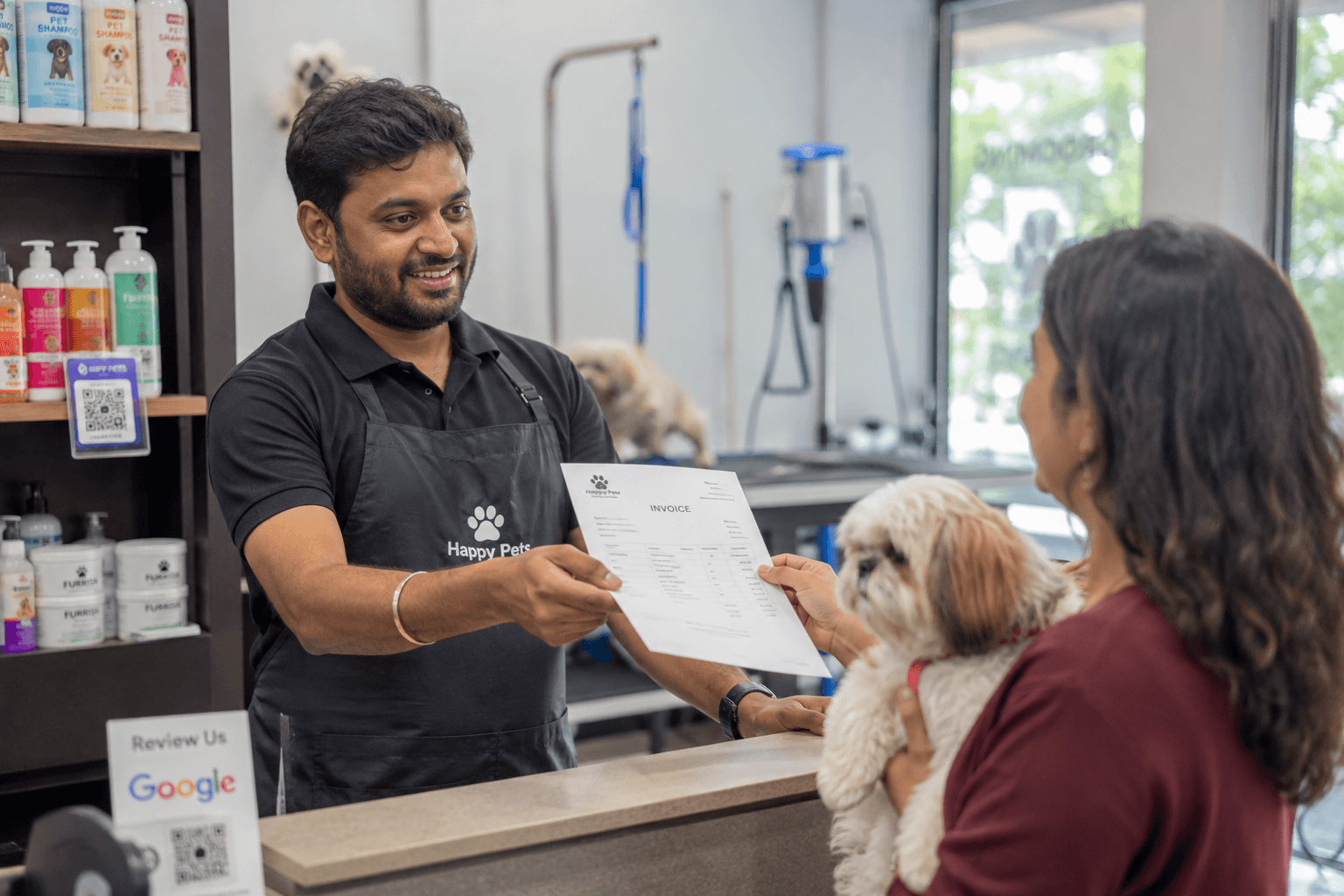
GST Invoicing for Pet Business: Things You Should Know Before Tax Filing in India (Beginner's Guide)
Aug 08, 2026
Best Pet Grooming Software in 2026: Complete Comparison Guide
Aug 06, 2026